
The Question Every Homeowner Asks First
If you're considering a kitchen remodel in San Diego, the first question on your mind probably isn't about countertop materials or cabinet styles. It's this: how long is this going to take?
It's a fair question. Your kitchen is the most-used room in your home, and living without it for weeks — or months — sounds daunting. The good news is that with proper planning and an experienced contractor, a kitchen renovation follows a predictable sequence. When you know what to expect at each stage, the process feels a lot less chaotic.
Here's a realistic, week-by-week look at what a typical mid-range kitchen remodel involves. While every project is different, this timeline reflects what we commonly see with our San Diego homeowners.
Before the Clock Starts: The Pre-Construction Phase
Before any demolition happens, there's critical groundwork that takes place over several weeks — sometimes months. This phase includes:
- Design and planning: Finalizing the layout, selecting materials, and making decisions about appliances, cabinetry, countertops, and fixtures.
- Permits: Depending on the scope of your remodel, the City of San Diego may require building permits, especially if you're moving plumbing, electrical, or walls. Permit timelines vary but typically take two to four weeks.
- Material ordering: Custom cabinets can take six to eight weeks to arrive. Specialty tile, imported fixtures, and certain appliances may also have lead times. Ordering early prevents costly delays later.
This pre-construction phase is where most of the schedule is won or lost. Rushing through decisions or waiting too long to order materials can push your entire project back by weeks.
Week 1: Demolition and Discovery
Demo day is exciting — and a little nerve-wracking. During the first week, the crew removes old cabinets, countertops, flooring, appliances, and sometimes walls. If your remodel involves changing the layout, this is when that work begins.
This is also the phase where surprises can surface. Older San Diego homes, especially those built before the 1980s, sometimes reveal outdated wiring, corroded plumbing, or water damage hidden behind walls. A good contractor builds a small contingency into the schedule and budget for exactly these situations.
By the end of week one, your kitchen will be stripped down to the studs, and you'll have a clear picture of any additional work that needs to happen.
Weeks 2–3: Rough-In Work
With the space opened up, the skilled trades come in. This phase includes:
- Electrical: Running new wiring for outlets, lighting, and appliances. If you're adding under-cabinet lighting or a new range hood, this is when that infrastructure goes in.
- Plumbing: Relocating or updating supply lines and drains for the sink, dishwasher, and refrigerator water line.
- HVAC: Adjusting ductwork if the layout has changed.
- Framing: Building new walls, soffits, or structural supports as needed.
Once the rough-in work is complete, the city inspector will need to sign off before the walls can be closed up. Scheduling inspections promptly keeps the project moving.
Weeks 3–4: Drywall, Mudding, and Painting
After inspections pass, drywall goes up. It then needs to be taped, mudded, sanded, and primed — a process that requires drying time between coats. Patience here pays off with smooth, clean walls.
Painting typically happens at this stage as well, at least for the first coat. It's much easier to paint walls before cabinets and countertops are installed. Touch-up painting will happen again at the very end of the project.
Weeks 4–5: Cabinets and Major Installations
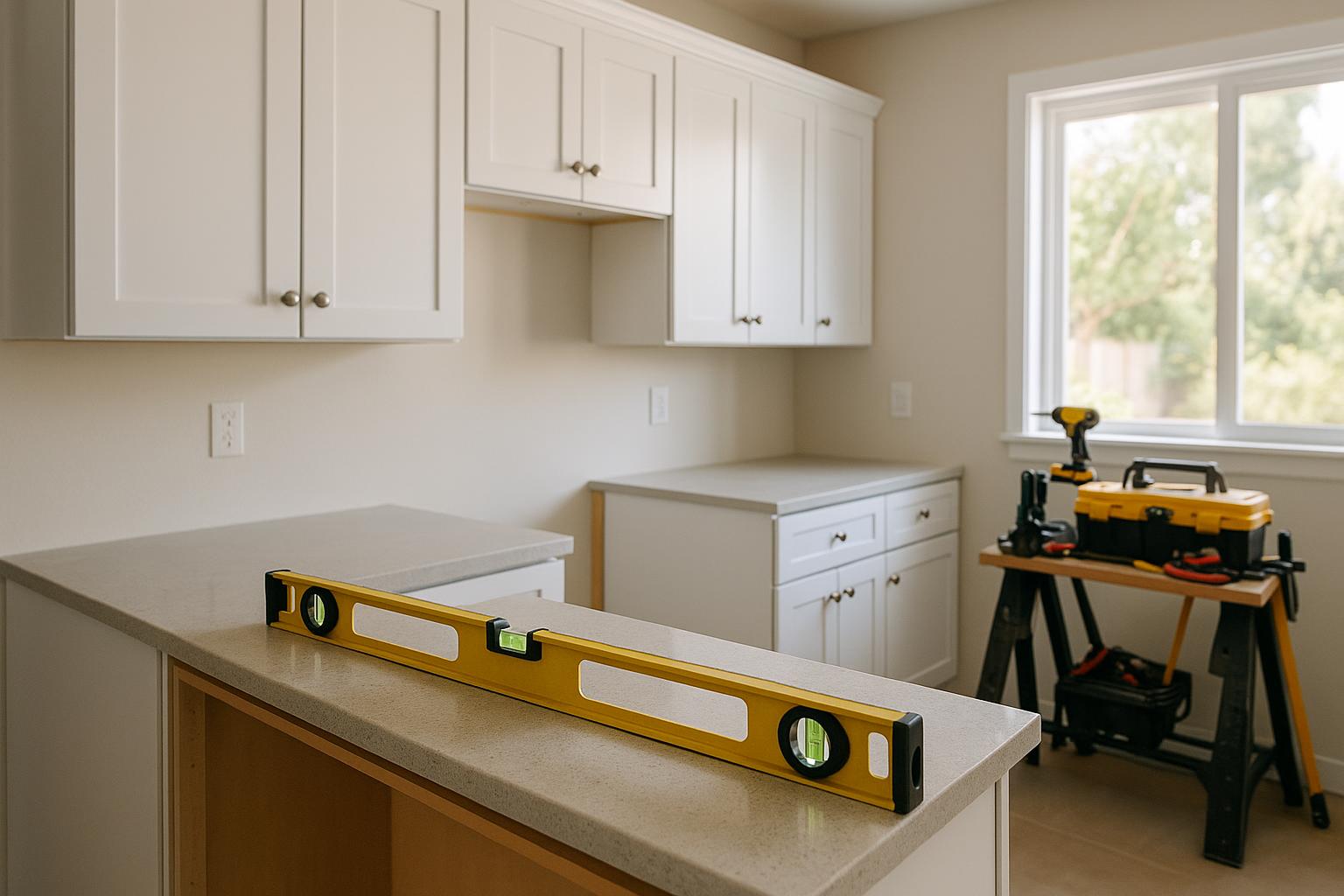
This is the week your kitchen starts to look like a kitchen again. Cabinet installation usually takes two to three days for an average-sized kitchen. Once cabinets are set and leveled, the countertop fabricator comes out to take precise measurements — called templating.
If you've chosen natural stone or quartz countertops, there's typically a one- to two-week fabrication period after templating. During this gap, other work continues:
- Tile backsplash installation
- Flooring installation
- Hardware and trim work
Weeks 6–7: Countertops, Fixtures, and Appliances
Countertops are installed, followed closely by the plumbing fixtures — your sink, faucet, and garbage disposal. Appliances are set in place and connected. Electricians return to install light fixtures, outlets, and switch plates.
This is the phase where all the individual pieces come together. It's deeply satisfying to watch, but it also requires careful coordination. Having one general contractor managing the entire process — rather than juggling multiple independent subcontractors yourself — makes a significant difference in how smoothly this stage goes.
Week 8: Final Details and Walkthrough
The last week is all about the details that separate a good remodel from a great one:
- Final coat of paint and touch-ups
- Caulking around countertops, backsplash, and fixtures
- Cabinet door adjustments and hardware alignment
- Thorough cleaning of the entire space
- Final inspection from the city, if required
Before we hand over the keys to your new kitchen, we do a detailed walkthrough with you. This is your opportunity to point out anything that needs attention — a cabinet door that doesn't close perfectly, a paint drip, a grout line that needs touching up. No project is officially complete until you're satisfied.
So How Long Does a Kitchen Remodel Actually Take?
For a typical mid-range kitchen remodel in San Diego — one that involves new cabinets, countertops, flooring, lighting, and appliances without a major layout change — expect six to eight weeks of active construction. Larger projects that involve moving walls, relocating plumbing, or custom features can take ten to twelve weeks.
Add the pre-construction phase, and you're looking at three to five months from your first planning meeting to cooking your first meal in the new space.
Tips for Keeping Your Remodel on Schedule
- Make decisions early. Indecision is the number one cause of delays. Choose your materials, finishes, and fixtures before construction begins.
- Order materials with lead times first. Cabinets and specialty items should be ordered as soon as designs are finalized.
- Set up a temporary kitchen. A coffee maker, microwave, and small fridge in another room will make the construction weeks much more comfortable.
- Communicate with your contractor. Ask questions, respond to texts and emails promptly, and don't let small concerns snowball into big problems.
- Hire a general contractor who manages the full process. A single point of accountability keeps every trade coordinated and on schedule.
Ready to Start Planning?
At Blackhawk General Contractors, we guide San Diego homeowners through every stage of the kitchen remodel process — from initial design through final walkthrough. We believe that clear communication and detailed planning are the foundation of every successful renovation. If you're thinking about transforming your kitchen, we'd love to talk through your vision and give you a realistic timeline tailored to your project.